
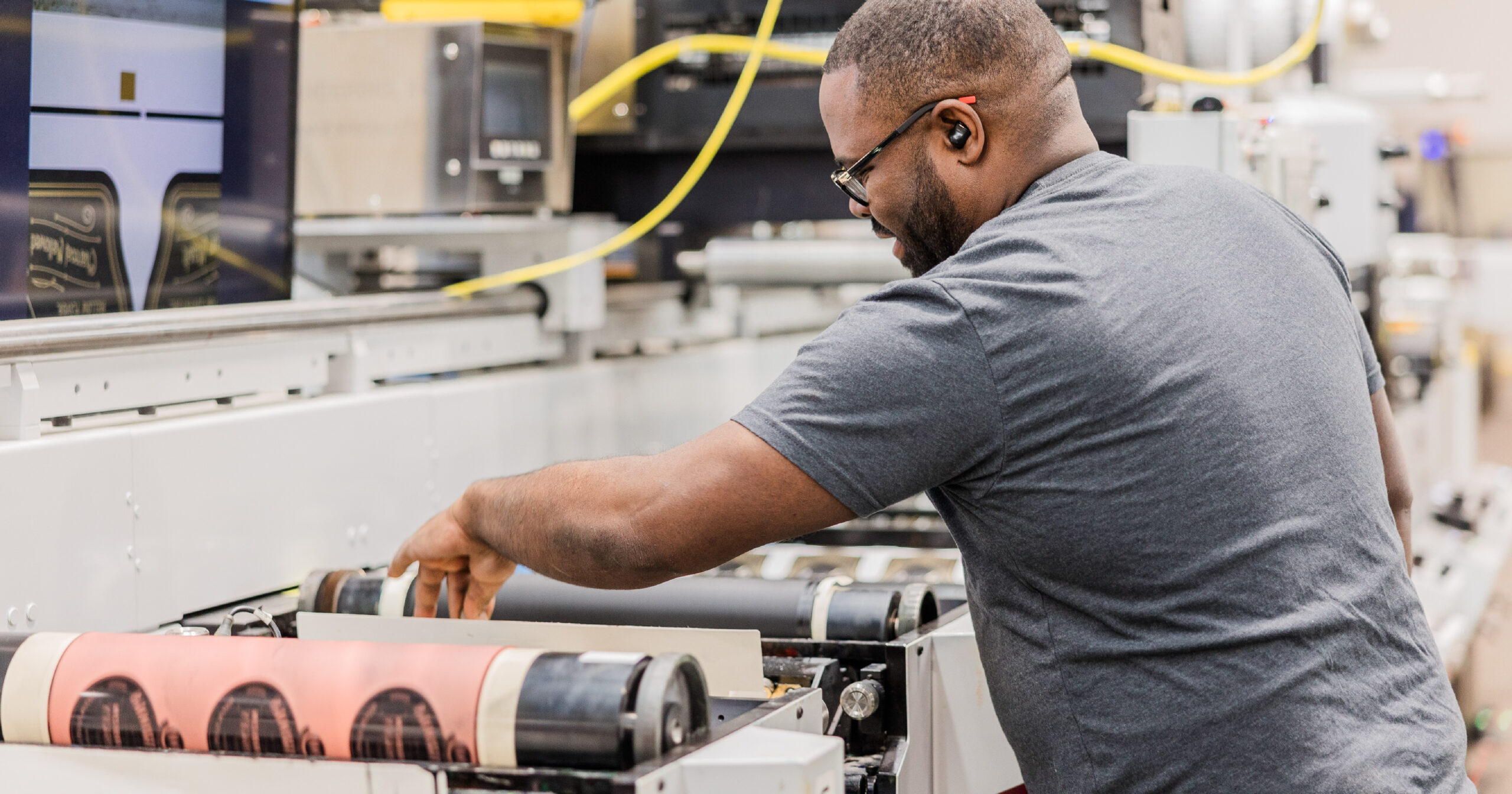
Procurement teams play a big role in how well a labeling program performs over time. Labels might seem like a small component of a finished product, but they have a big impact on regulatory compliance, production efficiency, and supply chain stability. Choosing the right flexographic label printing partner isn’t just a matter of pricing. It’s a strategic sourcing decision that can prevent delays and reduce risk over the long term.
Flexographic printing is widely used for high-volume label production across pharmaceuticals, food and beverage, nutraceutical, and industrial markets. For procurement professionals, understanding what separates a capable flexographic supplier from a true manufacturing partner helps ensure label programs remain reliable as volumes grow and requirements evolve.
Why Flexographic Printing Matters from a Procurement Perspective
The advantages of flexographic printing directly align with the priorities of a procurement team. From a sourcing standpoint, flexographic printing can:
- Keep prices stable across long production runs
- Result in faster turnaround compared to some alternative print methods
- Offer broad material compatibility for diverse product lines
However, these benefits only happen when the printing partner has the right equipment, processes, and experience. Procurement teams need to evaluate not just if a supplier offers flexo printing, but how well they execute those services.
The Role of Procurement in Label Performance and Supply Chain Stability
Label performance issues often surface downstream as production issues or regulatory exposure. Procurement teams can help prevent these outcomes by selecting partners that prioritize material compatibility, quality control, and documented processes.
Effective sourcing decisions can help with:
- Consistent label application on packaging lines
- Legible, durable print over the product lifecycle
- Reliable material availability
- Predictable lead times
Labels can be a stable component of the supply chain (instead of a recurring risk) when procurement teams choose collaborative suppliers.
Core Capabilities to Look for in a Flexographic Label Printing Partner
Not all flexographic operations are built the same. Procurement teams will want to assess experience and expertise with label production work similar to their project.
Experience with Regulated and High-Performance Applications
Suppliers serving pharmaceutical, food and beverage, and industrial markets should be familiar with:
- FDA and GMP environments
- Documentation expectations
- Change control processes
- Traceability requirements
This experience reduces onboarding time and lowers the likelihood of compliance-related disruptions.
Breadth of Material and Substrate Options
A capable partner offers access to multiple face stocks, adhesives, liners, and coatings rather than relying on a narrow material set. This flexibility allows label constructions to be engineered around application conditions rather than limited by supplier constraints.
Flexographic Press Capabilities and Configurations
Press width, color stations, inline finishing options, and inspection systems all affect what a supplier can produce efficiently. Procurement teams should understand whether a partner’s equipment aligns with current and anticipated program needs.
Material Sourcing
Material selection directly impacts label performance, cost, and availability. The materials selection process should be a technical one, not just the result of default options. There should be redundancy built into the sourcing, as well, to reduce the risk of production interruptions.
Procurement teams should explore how suppliers approach sourcing and qualification by asking questions such as:
- How are substrates, adhesives, and inks selected?
- How do you manage supplier relationships and material availability?
- What is your documentation process?
Quality Control and Process Consistency
Consistent label output is essential for high-volume programs. Procurement teams should understand how quality is monitored throughout production. Effective quality systems may include:
- Vision inspection
- Barcode verification
- Print defect detection
- Automated rejection
These tools reduce the likelihood that nonconforming labels reach customers.
Procurement teams should ask:
- How are processes validated?
- How are changes controlled?
- What records are maintained?
Documentation discipline reflects overall operational maturity.
Scalability and Production Capacity
Label programs often grow over time. Procurement teams must ensure suppliers can scale without sacrificing performance. Key considerations include:
- Press capacity
- Staffing depth
- Preventive maintenance programs
Capacity planning discussions help avoid future bottlenecks. Procurement teams should understand typical turnaround times and rush order capabilities by asking:
- What is your current capacity utilization?
- How do you plan for volume growth?
- How is preventative maintenance scheduled?
Compliance and Regulatory Support
In regulated industries, label changes are inevitable. Procurement teams should evaluate how suppliers manage compliance-related updates. Suppliers should demonstrate familiarity with regulated workflows and documentation expectations.
Procurement teams should ask:
- How are revisions reviewed, approved, and implemented?
- How is obsolete inventory controlled?
- What documentation is available for customer audits?
Suppliers that regularly support customer audits typically maintain stronger documentation and process control.
Total Cost of Ownership
The lowest unit price does not always equate to the lowest overall cost. Procurement teams should consider the total cost of ownership when evaluating suppliers. For example, reliable suppliers reduce:
- Line stoppages
- Product holds
- Rework
Which lowers overall costs, and consistent quality lowers waste and associated labor costs of reprints and scraps. Suppliers will often manage inventory, too, creating a more stable label supply without adding pressure on internal resources.
Procurement teams should evaluate the total cost of ownership by asking:
- What is your historical defect rate?
- How do you prevent repeat issues?
- What scheduling tools are used?
Signs of a Consultative Flexographic Partner
Transactional suppliers focus on producing labels to spec. Consultative partners help shape the spec by taking time to understand how labels are used, what conditions they have to hold up in, and where the risks are for the label. Rather than waiting for final artwork and material callouts, a strong partner will conduct upfront technical reviews that consider the lifecycle of the label.
A consultative model usually includes prototyping and performance testing to confirm that proposed constructions meet real-world requirements before full-scale production begins. Over time, the relationship extends beyond the initial setup. Consultative partners continue to look for opportunities to:
- Improve durability
- Increase consistency
- Simplify constructions
- Reduce costs
Their goal is to help procurement teams maintain a stable, optimized label program.
Building Long-Term Value with the Right Printing Partner
For procurement teams, selecting a flexographic label printing partner is a long-term investment. The right partner supports consistent output, stable supply chains, and controlled risk as product portfolios expand.
Organizations that work with experienced, consultative label converters gain more than printed labels. They gain a partner that understands how labeling choices affect manufacturing, compliance, and overall business performance.
Contact Systems Graphics to connect with a labeling specialist and discuss how their flexographic capabilities and quality-driven processes can support your organization’s labeling needs.