
Pressure-Sensitive Labels (PSL) are the overarching label format applied with pressure-activated adhesives to bottles, jars, pouches, and more. PSL can be produced by different print methods; for regulated markets, flexographic PSL is the reliable choice for color consistency, durability, and audit-ready results.
Labels aren’t just about looks. For regulated categories, they affect cost, line efficiency, and audit readiness. If you’re comparing print methods, focus on which approach best supports pressure-sensitive labels at your volumes and compliance needs. In most cases, that’s flexography—especially as SKUs stabilize and retailer color targets tighten.
Start a flexo PSL consultation
What is Flexographic Printing?
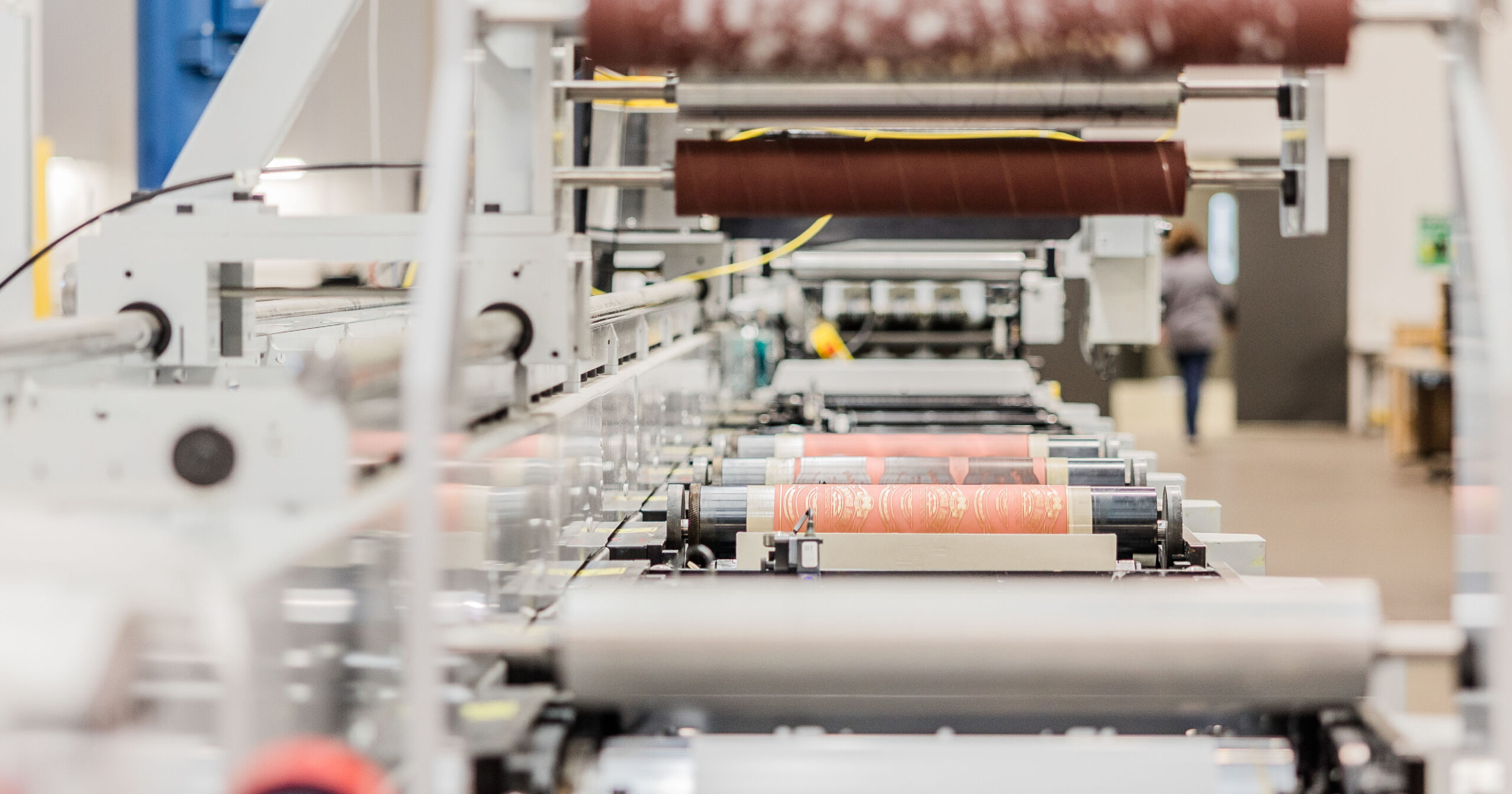
Flexography (flexo) is a high-speed, roll-to-roll printing process that uses flexible relief plates to transfer ink onto a wide range of PSL substrates. It’s built for scale and repetition, making it a good option for established SKUs and retailers with stringent color standards.
How it works
Your artwork is separated into spot or process colors. Photopolymer plates are produced for each color, mounted onto the press, and inked via rollers that lay down a consistent amount of ink. As material runs through the press, each station lays down its color in sequence before finishing steps. Color is managed by ink selection, so once a job is dialed in, it repeats with remarkable consistency.
Best use cases
Flexo shines on large or recurring runs, stringent brand color programs, and labels that must survive moisture, abrasion, or distribution stresses. It’s a go-to for food & beverage, industrial chemicals, and pharma-adjacent applications where durability and scan success matter. For pressure-sensitive labels, flexo provides a broad material and adhesive choice plus robust finishing at line speed.
What is Digital Printing?
Digital label presses image directly from the file, reducing setup time. This can support frequent artwork changes or small pilot. That said, regulated brands typically migrate core SKUs to flexographic PSL once designs and volumes stabilize to lock in cost, color, and consistency.
How it works
Digital printers (toner or inkjet) transfer high-resolution imagery directly onto PSL substrate. Variable data drives on-the-fly changes to text, barcodes, and graphics, while inline or nearline finishing adds coatings, laminates, foils, and die-cuts.
Best use cases
Short test runs or rapidly changing campaigns may consider digital. For sustained regulated programs, customers typically standardize on flexographic pressure-sensitive labels to maintain consistency and economies of scale.
How do Digital and Flexo Printing Compare for Regulated Industries?
Regulated teams weigh more than ink on substrate. Here’s how the processes stack up where it counts.
Comparison Table
| Criteria | Flexographic Label Printing (PSL) | Digital Label Printing (PSL – context only) |
| Cost | Lowest unit cost on large, stable runs; plate cost amortizes quickly. Excellent for long-term SKUs and retailer programs. | Lower setup for very short runs; unit cost typically rises as volumes grow. |
| Speed | Extremely fast once set; best for sustained production and high-volume reorders. | Fast to first sheet; strong for small batches—may not match flexo at scale. |
| Quality | Benchmark for color consistency, spot colors, specialty coatings at line speed—ideal for audits and scorecards. | High image quality; good for pilots. Matching long-run color consistency can be harder across time/vendors. |
| Durability | Broad material/adhesive range; robust finishes (laminates, high-build varnish, foils) for harsh environments. | Comparable when engineered well; substrate latitude improving, but often narrower per engine. |
| Compliance | Proven path for FDA/retailer specs; stable process control and documentation; excellent barcode performance. | Can support serialization and frequent content edits; governance needed to manage variability. |
The bottom line? For regulated programs that require repeatability, durability, and predictable costs, flexographic pressure-sensitive labels are the recommended standard.
Why Systems Graphics is Your Flexographic Pressure-Sensitive Label Partner
Regulated brands need PSL that perform on the line, survive real handling, and pass the audit every time. Systems Graphics engineers press-sensitive label construction for your environment, then runs them flexographically with tight color control and documented QC. We help you model total cost and risk by SKU and standardize on constructions that keep changeovers clean and output high.
Let’s review your portfolio and show you where flexographic PSL locks in advantages like:
- Stable unit cost at volume
- Repeatable color across reorders
- Broading finishing options
- Audit-ready documentation
Talk with the Systems Graphics team to start creating labels that protect your brand standards.
FAQ Section
Q: What exactly are Pressure-Sensitive Labels (PSL)?
A: PSL are self-adhesive labels supplied on a release liner. They’re the dominant format for regulated consumer goods because they run on standard applicators, support many materials/finishes, and stand up to distribution. Flexography and digital are methods to produce PSL; SYG produces flexographic PSL.
Q: Is flexographic printing safe for food and pharmaceutical labels?
A: Yes—when engineered with appropriate facestocks/laminates and FDA-appropriate, low-migration inks, flexographic PSL are a safe, compliant choice for food and pharma packaging. They also deliver excellent barcode legibility and color repeatability at scale.
Q: We run many SKUs. Can flexographic PSL handle frequent updates?
A: Absolutely. We maintain plate/tooling libraries, enforce version control, and schedule right-sized waves to phase in approved artwork without inflating inventory. For seasonal or promo spikes, we plan flexo runs to match demand and avoid obsolescence.