
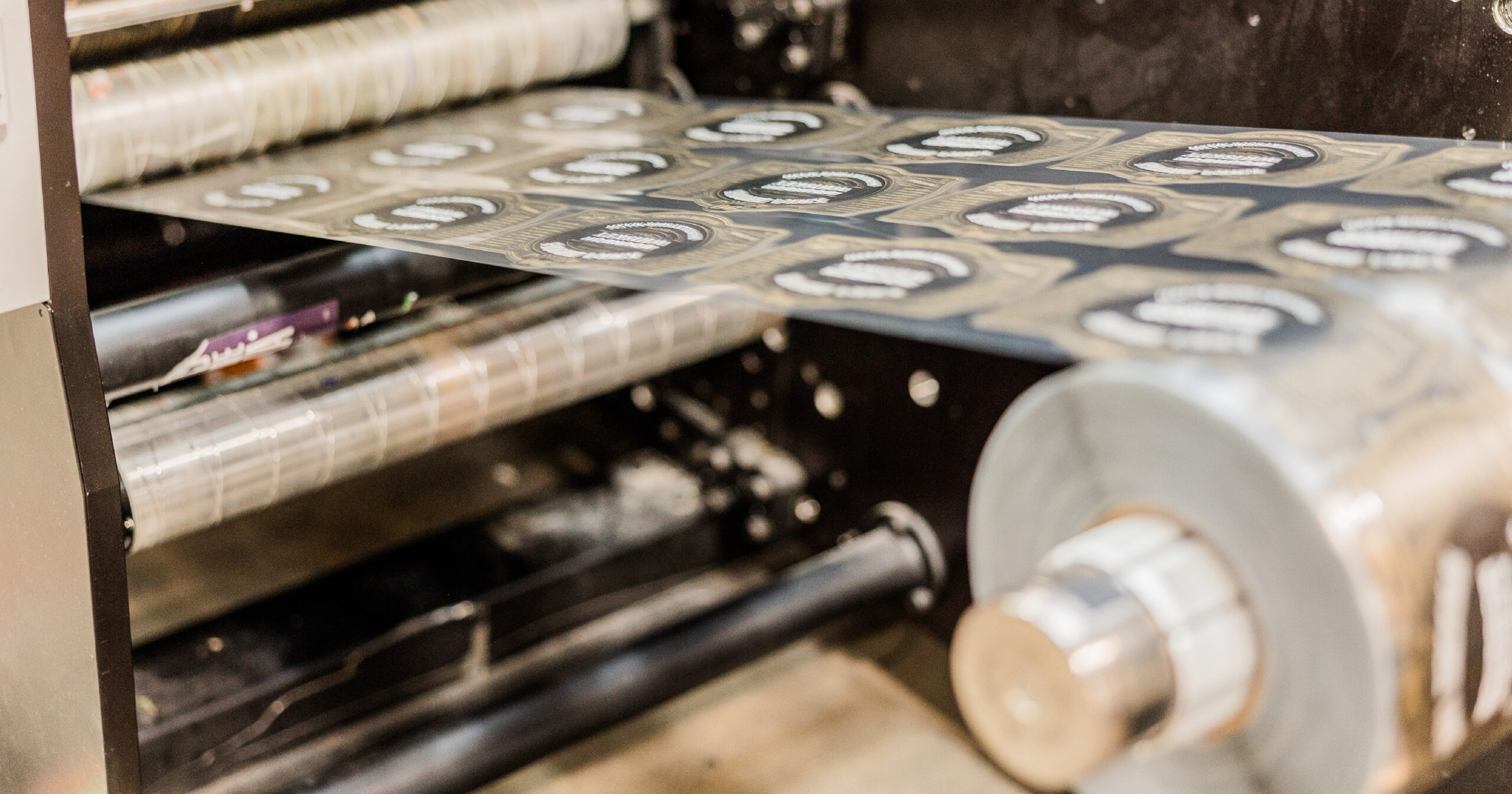
High-volume label runs can place a lot of pressure on production teams. As the volume grows, small issues can become big (and very costly) problems like longer lead times and shifting color variations. When you are managing multiple SKUs, these issues affect more than packaging. Brands and manufacturers will suddenly have to deal with issues in launch schedules and overall supply chain stability.
Flexographic printing supports large-scale label production with stable, repeatable output. When managed with disciplined press control and coordinated material planning, flexo helps shorten turnaround times, manage cost at scale, and maintain consistent results across extended runs. For teams feeling strain in their current process, a shift to flexographic printing can bring greater control and predictability to high-volume programs.
Get a quote for high-volume label runs with our flexo printing service→
Why High-Volume Label Programs Break Down
When you start to experience problems with a high-volume label program, the cause is usually gradual strain rather than one isolated failure. Small gaps in planning, communication, or press control can build over time and start to affect schedules, quality, and cost performance.
Common issues include:
- A press that’s over capacity
- Inefficient changeovers
- Reactive material sourcing
- Incomplete documentation
- Poor artwork version management
Each of these issues on its own may seem manageable. Together, they create production friction that shows up as longer lead times, inconsistent color, or last-minute schedule adjustments.
When reprints and rush orders become the norm, it’s a signal that it’s time to review the printing process and identify where stability has started to slip.
Why Flexographic Printing Works for High-Volume Runs
Flexographic printing supports sustained production demands at scale. The process relies on durable plates, controlled ink systems, and press configurations designed for long runs with minimal interruption. When properly managed, flexo presses maintain output and quality over extended production cycles.
Flexography offers:
- Predictable print quality across thousands or millions of labels
- Compatibility with a wide range of materials
- Inline finishing that reduces secondary handling
Because settings can be documented and repeated, flexographic runs become more consistent over time. With preventive maintenance and disciplined setup procedures in place, throughput remains steady while quality stays within defined targets.
Reducing Lead Times Through Process Control
Lead time is influenced by more than press speed. It also depends on how the job moves through all the stages of production.
Inline finishing has a big part to play here. By applying coatings and other enhancements during the press run, brands and manufacturers can avoid additional offline steps. Fewer touchpoints mean quicker queue times and a lower risk for delay.
Standardized press setup also helps. When everything follows a documented guideline, including the ink densities and plate mounting, changeovers are predictable. It’s a lot easier to adhere to a schedule when predictability is built in.
Controlling Cost Across Large Production Runs
Stability and efficiency are the keys to cost control in a high-volume label program.
Flexographic printing spreads plate and setup costs across longer runs, which lowers the per-label cost at scale. When jobs are planned strategically, repeat runs will benefit from established settings and documented specs.
Material management matters, too. Working with a print partner that maintains relationships with multiple suppliers means you get better stability in pricing and have a lower risk for material shortages.
Reducing waste is also key. Consistent press operation and inspections will limit how much scrap is created and what rework is needed. Over time, fewer disruptions mean fewer unplanned expenses.
Maintaining Print and Color Consistency
Need brand consistency? Then you need to control execution. That starts with standardized ink management to maintain color targets from run to run. Documenting formulas and density measurements will make results repeatable on every run.
Press calibration and preventative maintenance can also help reduce errors caused by mechanical factors. When equipment is maintained on schedule, print quality is more stable throughout extended production cycles.
Artwork control is critical here as well. Clear version management and documented approvals prevent outdated files from entering production. Being tightly disciplined on this can prevent costly relabeling or disposal.
Supporting Multi-SKU and Expanding Product Lines
As product portfolios grow, label complexity increases. Each SKU might have a slight variation in color or design element, along with differing regulatory text. Over time, these small variations add up, creating more plates, more artwork files, and tighter scheduling demands. Without a structured process, the added volume can slow production and increase the chance of errors.
Flexo presses allow manufacturers to run related SKUs without significant downtime thanks to efficient changeover processes and documented setup procedures. Job histories, approved artwork files, and recorded press settings make it easier to reproduce prior runs with minimal adjustment. This level of control supports smoother transitions between SKUs and helps maintain consistency across expanding product lines.
When to Reevaluate Your Current Print Process
Is it time to review your current label program? It might be, if you are seeing:
- Late shipments occur on a recurring basis
- Color adjustments are required frequently during production
- Reprints have become routine rather than occasional
- Material costs continue to rise without a clear explanation
- Your team spends increasing time managing artwork corrections or following up with suppliers
- Production schedules are disrupted by avoidable quality or sourcing issues
If any of these sound familiar, it’s time to explore moving your next run to a team with flexographic printing capabilities.
Partnering With Systems Graphics for High-Volume Label Programs
High-volume label programs demand structure, discipline, and steady execution. Systems Graphics begins by reviewing your current label constructions, production flow, and material strategy to pinpoint where delays, variation, or unnecessary cost enter the process. From there, we outline clear, practical adjustments that strengthen consistency and improve turnaround performance.
Our flexographic approach centers on documented press settings, controlled sourcing, and reliable quality checks. The result is a label program that runs smoothly under pressure and scales with demand.
If your team is managing growing volumes or recurring production strain, connect with Systems Graphics to review your current process and identify where flexographic printing can bring greater stability and control.