
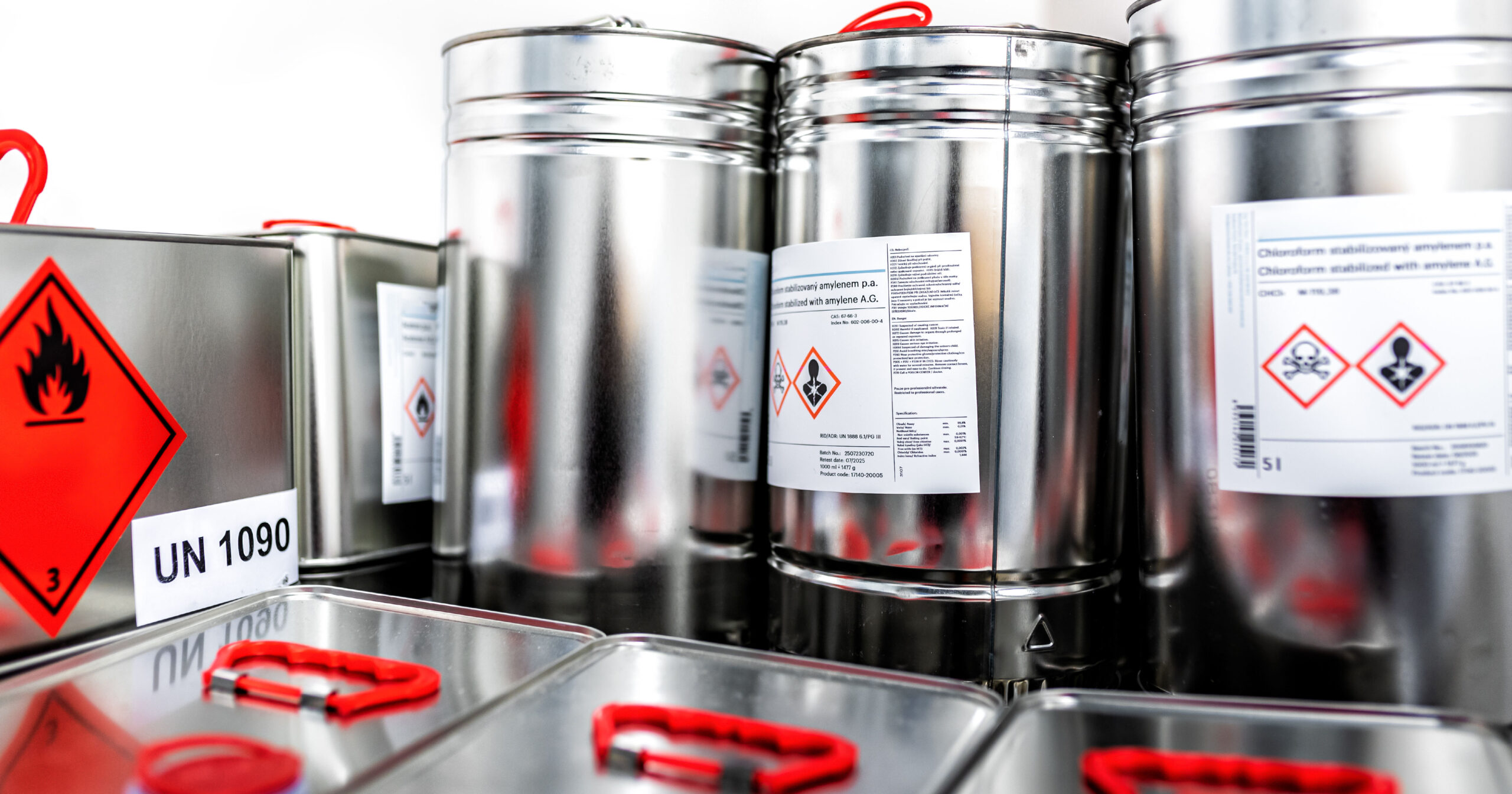
Tamper-evident labeling on industrial products are there for consumer protection, warranty integrity, and a safeguard to your company’s reputation. They have to stick when they should, break when they are supposed to, and show evidence clearly. But the conditions they have to work in make the process more challenging. They have to hold up to harsh environments and rough handling without fail.
Make sure you are choosing tamper-evidence solutions suitable for real-world industrial settings.
Get a Quote on Tamper-Evident Solutions
Industrial Realities: What Your Labels Have to Survive
Industrial surfaces and environments add a layer of complexity you don’t see on the retail shelves. These labels have to endure:
- Exposure to solvents, oils, grease, UV, dust, moisture, heat/cold cycles, and abrasion from handling and transport.
- Low-surface-energy plastics on drums, powder-coated metals, coated glass, and electronics.
- Regulatory inspections, lot traceability, and warranty control for electronics.
Our job is to engineer a construction and seal style that behaves the same on Day 120 as it did on Day 1, despite temperature swings, pallet moves, wipe downs, and real-world usage.
Want to know more about industrial chemical labels? Read What You Should Know About Industrial Chemical Labels for more information.
Tamper-Evident Mechanisms that Work in Industrial Settings
Not every security cue fits every surface. We match the mechanism to the application so evidence is obvious, removal is obvious, and users can still do their jobs. For the industrial setting, we recommend:
- Destructible and frangible films: Ultra-destructible films and engineered “egg shell” papers fracture on removal. They’re ideal for warranty seals on fasteners and electronic housings. Once applied, there is no clean peel, so any lift becomes visible damage.
- Transfer/VOID polymer: These leave a crisp residue pattern on metals, glass, and coated boards when someone lifts the label. Transfer strength can be tuned so the pattern stays readable in greasy or solvent-exposed environments.
- Mechanical cues: Die-cut patterns force a visible break along a seam or flap. We design bridge strength so the seal fails cleanly when opened, but authorized service can still access fasteners or ports without destroying the enclosure.
Materials & Adhesives Engineered for Harsh Conditions
Label success is won or lost on construction. We work closely with manufacturers to specify facestock, adhesive, and finishes that are proven for your surface and use case, then validate them on your line.
Chemical-Resistant Facestock
- Polyester (PET): A dependable “do-most” film with strong dimensional stability and solid chemical resistance. Great for housings, cabinets, drums, and gear that sees light solvents and abrasion.
- Polyimide: The heavyweight for high heat. If parts live near engines, panels, or process heat—or see short bursts of extreme temps—polyimide keeps micro-type and graphics intact.
- Paper & specialty films: Paper can work for indoor service tags, but for tamper evidence and durability, frangible films (ultra-destructible vinyl, engineered “egg-shell” papers) make clean removal essentially impossible.
Pro tip: Pair facestocks with a protective overlaminate when exposure includes wipe-downs, scuffs, or UV. The laminate takes the abuse, and your small text and pictograms stay sharp.
Adhesives by Surface & Environment
- Low-surface-energy plastics (HDPE/PP): Drums, totes, and jerrycans are classic LSE. Use high-tack, LSE-rated adhesives that wet out quickly and keep the bond through temperature swings and condensation.
- Metals & coated substrates: Powder-coated steel, anodized aluminum, and coated glass look smooth but behave differently. Pick adhesives proven on coated surfaces and confirm with a quick pull test after 24–48 hours of dwell.
- Chemical & moisture exposure: If oils, fuels, cleaners, or steam are in the picture, choose chemistries that hold their tack after contact and through cycles of wet/dry.
Application basics that pay off: Clean, dry surface; firm pressure at application; respect dwell time before stress.
Finish & Protection
- Finishes that work: Abrasion-resistant varnishes or laminates, UV-stable inks, and anti-smudge coatings protect legibility in the real world.
- Keep codes scannable: Reserve barcode quiet zones. Print and verify at the final size on the real substrate. Glossy films and uncoated papers reflect light differently from a screen proof.
- Contrast counts: If your palette leans dark or the surface is textured, add a light field behind critical text and codes so they pop under warehouse lighting.
Make Tamper Cues Obvious
Tamper evidence should be readable at a glance. For transfer films, tune the residue pattern so it stays readable after handling. For frangible options, set bridge strength so the break looks consistent across runs but still lets authorized service access fasteners or ports without tool fights.
Validate in the Real World
Run a mini-pilot on real parts in real conditions. Apply the spec, allow dwell, then open the package as a tech or customer would. You want two outcomes:
- A bond that stays put
- A break that’s obvious without making service difficult
Mimic exposure next by wiping with your actual cleaner and putting it in heat/cold cycles or humidity checks (if relevant). Recheck the bond and evidence.
Finally, verify readability at the final size on the finished substrate. Grade barcodes and review small text under real lighting. If tweaks are needed, make them now and lock the standard.
How We Design Tamper-Evident Labeling Solutions
We don’t hand you a catalog and wish you luck. We collaborate with companies closely and early in the process to engineer the right build and prove it under real-life conditions. Here’s how:
- We start with your reality. Tell us the surfaces, chemicals, temperatures, and handling your labels will face. We’ll recommend a construction that bonds reliably and a tamper cue that’s easy to read, even after months in the field.
- We design the evidence. Seal geometry, finger lifts, and “peel here” cues are placed where they will help. When the seal breaks, it’ll be obvious at a glance.
- We make the launch smooth. You get quick pilots on real parts, photo-based acceptance criteria your operators can use, and simple setup notes so new shift can hit the standard on day 1.
- We keep audits boring. Documentation covers material, revision control, and inspection results. If a question comes up, we can trace rolls to lots and provide samples quickly.
Choose Systems Graphics for Tamper-Evident Labeling
Tamper evidence in industrial settings doesn’t have to be complicated. It just has to be right for your surface and environment. If you’re ready to harden warranty control, protect IP, or improve safety compliance, get a quote from Systems Graphics today. We’ll review your parts and conditions, then recommend a build and seal style that lasts.